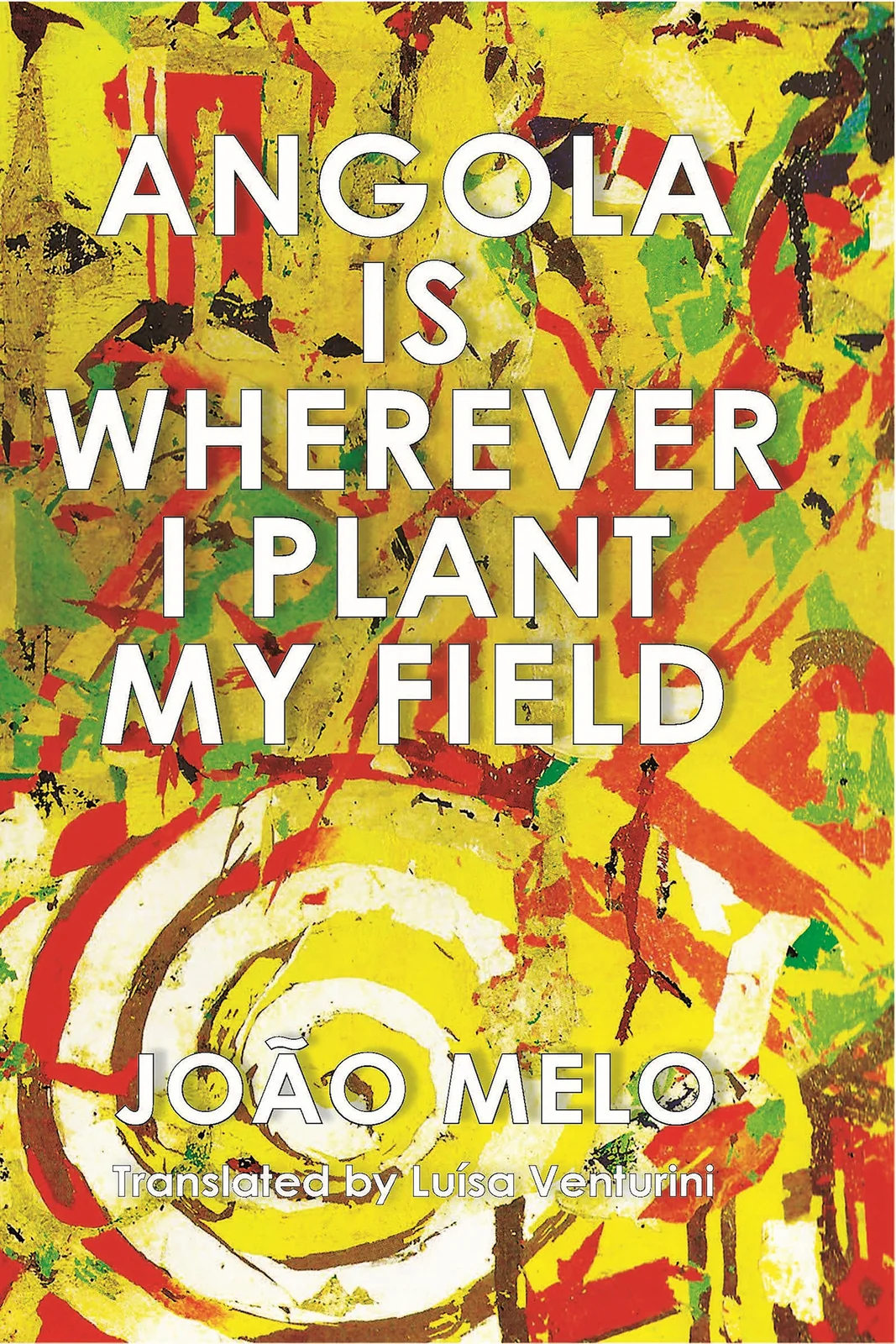
Angola is Wherever I Plant My Field
available
Get the book
Look inside
×The Revolutionary Duck and the Counter-Revolutionary Duck
Angolans—in addition to loving makas,1 partying till morning, arriving late for appointments, and using and abusing humor even against themselves—were post-modern before the concept was even invented. Iconoclasts, they don’t take anything too seriously to the point of behaving like jerks—this term may not be very literary, but what to do when the writer himself is Angolan?—when it comes to the lessons, the rules, and the models that the world has been trying to impose on them forever.
Contemporary history is full of examples that confirm the profound and multiple irresponsibility of Angolans. Firstly, when millions were taken to the Americas as slaves, not only did they resist being completely destroyed by brutal exploitation and unknown diseases such as influenza and syphilis, but they taught their very oppressors how to forge iron, extract diamonds and gold from the ground and how to plant (and harvest) sugar cane and coffee.
They also taught the oppressors how to play and dance to the ancestral rhythms they carried in their blood and which they spread from the cotton fields in the North of the American continent to the pampas in the South. They reinvented the languages imposed upon them, introducing thousands of new words and expressions. They contributed to the Africanization of the Indo-European religions they encountered across the new continent. They created heroes like Zumbi, in Brazil, and the nineteen Angolans who contributed to the fight for independence in Chile. Finally, they transformed the vast and sunny region between the Caribbean and Brazil into a warehouse full of mixed-race girls, quite correctly considered to be an authentic global product nowadays.
Meanwhile, those who stayed in their homeland welcomed the foreign aggressors in a way that will remain forever in the annals of human conviviality: fighting them fiercely, they nevertheless did business with them; handing over their daughters for marriage; adopting their religions while teaching them ghostly rituals that would drive them crazy; tasting the aggressors’ wishy-washy wine while offering them their own unknown drinks to taste; and lastly, taking them into the depths of the most remote parts of their country, where they would get yellow fever and die hopelessly. For those who are unaware, I should add that these different and multiple strategies were not used alternately but simultaneously, to the despair of the invaders who, to this day, have been utterly unable to get to fully know the Angolans, particularly their instinct for survival and their flexibility.
One particularly incomprehensible detail for the aforementioned invaders was how, in the course of this extraordinary process, the Angolans were mixing not only among themselves but with the invaders too, both killing and desperately fornicating with them, thus swallowing each other up in an incredible history of blood and laughter, crime and redemption, all the time making them more and more Angolan. As proof that extreme ends really do meet, this is considered the height of irresponsibility, not only by past invaders but also by contemporary ultra-nationalist and neo-racist cazumbis.2
More recently, Angolans were the authors of two of the most prodigious operations of social engineering in contemporary history: they transformed Marxist-Leninist socialism into a schematic socialism, and neo-liberal capitalism into mafia capitalism. Some authors call the former Afro-Stalinism and the latter savage capitalism, but these are ideological titles without any use whatsoever, and fine post-modern literature should not waste time on them.
If comrade Chung Park Lee knew a little bit of Angolan history—not the one taught in the guides and manuals, but the everyday one which, in truth, is yet to be written because that task would require overcoming several general prejudices and preconceptions—he would have been immediately wary of the question asked by the MPLA guerrilla, who arrived in North Korea only two weeks earlier for his military training:
End of sample. From Angola is Wherever I Plant My Field.
Bulk, trade & institutional orders
About the book
In this collection of eighteen humorous absurdist stories, Melo weaves together postmodernism, postcolonial realities and Angolan history, through an intrusive narrator and author.
In this collection of eighteen humorous absurdist stories, Melo weaves together postmodernism, postcolonial realities and Angolan history, through an intrusive narrator and author. Angola is Wherever I plant My field will make the readers laugh as they reflect on life and society through stories set in Luanda, Haifa, America, and North-Korea.
Book details
Contributors
Author in focus
Praise & recognition
Related reading
Chosen by contributor, series, and subject — not an automated “others also bought” list.
For educators, book clubs, libraries and institutions
Considering this title for a course, a reading group, a library collection or a bulk order? Tell us what you have in mind and we will follow up.
Not buying today? Join the Iska Press list for new books and news, no more than twice a month.